Showing posts with label shipping. Show all posts

Tuesday, August 13, 2019

Bubble: Benefits & Strength


Bubble comes in two primary categories:

1.VOID FILL – filling in excess space around products in a box or container, protecting them against damage.

Typical applications:
– Shipping giftware
– Shipping books
– Shipping small appliances
– Shipping multiple items in the same container


2.BLOCKING & BRACING – securing products in a box or container to prevent them from shifting, sliding, moving, or colliding.

Typical applications:
– Shipping books
– Shipping jewelry
– Shipping fragile Items
– Shipping computer monitors
– Shipping precision gears
– Shipping sculptures
– Shipping Un-assembled furniture

These two categories go hand-in-hand as all empty space should be filled in order to block and brace effectively.

Pack station using Polyair AirSpace G6 machine and bubble-on-demand

Pros of Bubble

✔ Comes in different sizes and film thicknesses.
✔ Comes in different forms like bags, sheets, and rolls.
✔ Offers protection against shock and vibration.
✔ Easy-to-use, reusable.
✔ Versatile: interleaving, wrapping, and cushioning.

Cons of Bubble

✘ Designed for short periods of use (days or weeks).
✘ Can be difficult to recycle (explained below).

The Use of Nylon Vs. 100% Polyethylene

Some bubble film companies use Nylon in their bubble manufacturing process. Nylon lowers the recycle number from a #4 to a #7 recycled product (where facilities exist), and also makes the bubble much less pliable. This lack of pliability, particularly evident when wrapping around corners or other sharp edges, causes some bubble products to puncture and tear much easier than products that are 100% polyethylene. With consumers becoming ever more aware of their environmental impact, but not wanting to sacrifice performance, a bubble product made with 100% polyethylene is the smartest choice.

How Do I Know Which Bubble is Best/Strongest?

Below is a graph detailing Polyair 1/2" Bubble against two Nationwide competitors. The bubble burst strengths were measured by observing the pounds of force needed to break the bubble.

5-10 tests were completed for each product. The averages are charted here:


Friday, July 19, 2019

Protective Packaging Guide


How Do I Know If I Need Protective Packaging?


If you have a product that is fragile or has a surface that needs to be protected during transit, then protective packaging may be the answer. It can help ensure that products remain damage-free and quality is kept uncompromised during the shipping and transporting process.

Protective packaging can also be useful when shipping a product in an oversized box. It can fill the void between the product and the box. This is especially useful when shipping heavier items that could get damaged with too much shifting around during the shipping processes.

Some companies use protective packaging to create a unique unboxing and brand-centric experience for their consumers. Presentation is a very important part of the un-packaging process in the minds of consumers. Some protective packaging solutions serve a dual purpose, of functionality and visual appeal. This can help create brand loyalty and return customers.

Protective packaging offers the flexibility needed to protect any shape, size, or strength of products. It comes in a range of different types so you can find right protection for your products and shipping needs.


What Kind of Protection Do I Need?


VOID FILL
Void fill is a term that can refer to any cushioning, paper, or protection added to a package. Specifically, it fills an empty space inside a package and, in doing so, restricts movement of the product(s) which prevents damage.

BLOCKING & BRACING
The purpose of protective packaging that blocks and braces is to prevent products from shifting, sliding, or moving and protect the product(s) and the vulnerable corners and edges of the secondary package (carton) from damage. In order to block and brace effectively, all empty space should be filled as well.

CUSHIONING
This is normally something that is wrapped around more fragile objects to prevent damage during transit. Cushioning can prevent scratches or scuffs on products.

SURFACE PROTECTION
Often the protective packaging solutions that provide cushioning, also provide surface protection. This protective packaging keeps the products from getting scratched, scuffed, or the exterior surface of the product from being damaged.


Types of Protective Packaging


Paper void fill & cushioning
PAPER
Paper is normally used as to cushion products, but is versatile. Paper can also be used to block and brace and as a void fill solution. Paper is normally crumpled, either by hand or machine, which provides void fill and cushioning solutions. Some machines apply stitching to the paper to provide stronger block and brace protection as well as cushioning.

BUBBLE SOLUTIONS
There are a variety of bubble solutions. There are, of course, the standard and anti-static bubble that come in rolls and pouches. Bubble also comes in cohesive and adhesive forms as well. The cohesive bubble bonds to itself and not the product, while the adhesive bubble bonds directly to the product. Bubble solutions are used for cushioning and surface protection.

Bubble-on-demand systems
INFLATABLE CUSHIONING SYSTEMS (Bubble and Pillow)
Inflatable air solutions, including air pillows and bubble films, are one of the most common protective packaging solutions today. They are stored un-inflated and flat, but can quickly be inflated with the use of a machine. Air pillows can provide void fill, blocking and bracing, or cushioning to products. They can also help keep the weight of a package down, which is important for shipping. Bubble film is meant more for cushioning products. Like other bubble products, it is often wrapped around individual products or it can be placed on the bottom, top, and sides of a carton to protect multiple/larger items.

SURFACE PROTECTION
Often the protective packaging solutions that provide cushioning, also provide surface protection. This protective packaging keeps the product from getting scratched, scuffed, or the exterior surface of the product from being damaged.

HexcelWrap fragile wrap
FRAGILE WRAP
Fragile wrap is a paper-based cushioning material. This material is wrapped around products to reduce damage. It can assist businesses in using less packaging material for fragile products and is curbside recyclable. Fragile wrap is used on products like glassware, ceramics, cosmetics, electronics, and more.

FOAM
Foam protective packaging solutions are normally used on more expensive products to provide surface protection. You will see foam on products such as furniture, appliances, and more. Foam can come in sheets or pouches and in a variety of colors. It can also be cohesive or adhesive. Cohesive foam forms a bond to itself and not the product, while adhesive foam sticks to the product. Foam products can also be laminated with a film to provide added strength. This is known as lamifoam.

Polyair Mailers
MAILERS
Mailers can be made of paper or plastic. They are durable, lightweight, customizable, and are available in a wide range of sizes. Mailers normally contain bubble to protect products from damage during shipping. These are best for smaller products and can help decrease shipping costs compared to cartons.

ANTI-CORROSION
There is a wide variety of protective packaging that offers
anti-corrosion VCI (Vapor Corrosion Inhibitor) protection. Some of these forms include poly and foam bags and films, paper, powders, and emitters. These solutions offer protection against corrosion and eliminate the use of oils rust removal, industrial degreasers, sandblasting, and more. It is important to one’s health and the environment that you choose a VCI that doesn’t include sodium nitrite. These solutions can be used in a large range of industries – automotive, heavy equipment, aerospace, electronics, precision metal, and more.

Wednesday, March 20, 2019

Padded envelopes vs. boxes: Which is the better choice for your operation?

For e-commerce businesses, packaging is a significant expense. Consequently, the choices you make regarding the materials you use can have a big impact on profitability. Two popular options are padded envelopes and boxes. Which is the better choice for your operation? That depends on a number of factors.

Padded Mailers vs. Boxes: The Advantages and Disadvantages

In order to decide whether you get greater ROI from padded mailers or boxes when it comes to shipping your merchandise, you must first consider the pros and cons of each. From there you can determine which characteristics will have the biggest impact on your shipping process and make your choice.New Call-to-action
However, before you decide which form fits your specific need you must take into account what you are shipping in the first place. If you find that your operation is shipping more textiles, then the option toward mailers is a smart and logical one. If, on the other hand, your operation is shipping breakable merchandise, then the option for box packaging with the proper internal void fill is critical to the customer experience and the likelihood that you may win the next purchase from that customer.

PADDED MAILERS

The advantages of padded mailers include that they are:
  • ✔ Lightweight. This means that generally they cost less to ship.
  • ✔ Inexpensive. Padded mailers tend to be competitively priced.
  • ✔ Produced with built-in item protection. Because they are padded, these mailers may not need any additional structural support.
  • ✔ Speed of packaging – In a business that counts on every second to get as many packages mailed, padded mailers pack out very quickly.
  • ✔ Small. Padded mailers take up less space when they are shipped to you by the manufacturer, which can result in cost savings. Plus, they take up less space in your warehouse or packing station. 
Like all types of packaging materials, padded mailers have disadvantages as well, including that they are:
  • ✔ Susceptible to crushing. While the padding provides a certain level of protection, padded mailers and their contents can be crushed if they wind up under a heavy box or pressed between boxes.
  • ✔ Easily torn or punctured. Padding does not prevent padded mailers from being torn or punctured and having their contents damaged. They also provide little protection from liquids.
  • ✔ Not recyclable. For companies focused on sustainability, that fact that padded mailers can’t be recycled can be an issue.
  • ✔ Unable to accommodate large items. While you can buy fairly large padded envelopes, there are still many types of items that are too large to fit into even the biggest size.
  • ✔ Not designed to handle heavy items. Padded mailers that contain heavy items are prone to tearing.
  • ✔ Best at holding one item at a time. Shipping more than one item in a padded mailer increases the risk that one or both will be damaged.

BOXES

The advantages of boxes include that they are:
  • ✔ Strong. Corrugated cardboard boxes in particular are very sturdy.
  • ✔ Designed to hold heavy items. Especially when sealed with water-activated tape (WAT), boxes can be used to safely ship weighty merchandise, such as automotive aftermarket parts
  • ✔ Reusable and recyclable. Cardboard boxes can be used multiple times and then ultimately recycled.
  • ✔ Available in many sizes. From very small to very large, there is a box to meet most shipping needs.
  • ✔ Ideal for shipments that include multiple items. With the right padding, many items can be shipped in one box.
The disadvantages of boxes include that they:
  • ✔ Typically cost more than padded mailers. Boxes tend to be more expensive.
  • ✔ Typically cost more to ship than padded mailers. This is especially true when dimensional weight pricing is used.
  • ✔ Require padding. To ensure merchandise is protected when you ship it in boxes you must wrap items and fill voids.
  • ✔ Take up more space. Boxes are rigid, bulkier, and harder to store.

Choose Wisely

There are many instances when either a padded mailer or a box will work equally well. However, in others, it clearly makes sense to use one or the other. Taking the time to make these determinations will pay off in the long run. Remember as you do your assessment to consider the cost of handling returns and providing refunds when merchandise is damaged.
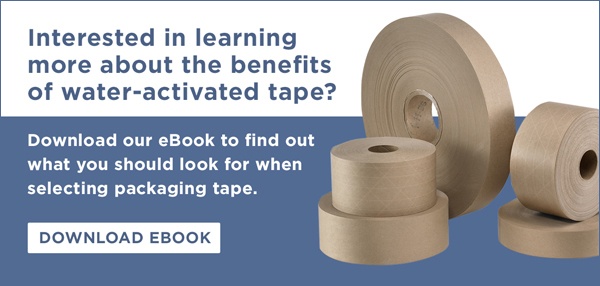
In situations that call for a box, WAT is the right choice for sealing the carton. Strong, tamper-resistant, and brandable, it provides the functionality e-commerce retailers need and creates a polished, professional look.
Likewise, in situations where mailers or padded mailers are the right choice, finding a reliable source of well-designed and secure mailers is critical. The rate of use is increasing daily and your operation cannot afford to be slowed or stalled for lack of packaging materials and suppliers.
To learn more about our water-activated tape, water-activated tape dispensers, and other products, please contact us at your convenience.

A Guide For Tape Dispensing Performance Solutions

[This post republished from the 
Better Packages Blog]

Thursday, February 7, 2019

6 Ways to Improve Your Shipping Strategy


There are steps you can take to evaluate and enhance your shipping practices

The explosive growth of e-commerce in recent years is a double-edged sword. While it has created tremendous opportunity for retailers, that opportunity has likely enticed many competitors into the market. Consequently, shipping merchandise effectively and efficiently is more important than ever.

With customers increasingly vocal about their purchase experience, if at any point complaints start to rise or your shipping ROI starts to fall, it’s time to reassess your shipping strategy.

“When complaints rise or shipping ROI falls, it’s time to reassess your shipping strategy. TWEET THIS

6 Ways to Improve Your Shipping Strategy

As everyone responsible for e-commerce business knows, shipping costs play a major role in determining a company’s profitability. If you aren’t getting merchandise to customers on time and undamaged, your financial results will suffer. Every hour spent on inefficient processes or responding to customer complaints about lost or damaged shipments cuts into your bottom line.
Fortunately, there are steps you can take to evaluate and enhance your shipping practices. To ensure your shipping processes are optimized and your shipping team is contributing to the company’s overall success, do the following:
  1. Determine your goals and whether you are meeting them. How long should it take to properly pack merchandise? How many times should a box be touched as it moves through your shipping area? How many units should go out the door each day? It’s important to have well-defined goals and to continually assess your efforts in relation to them. Also, if your goals aren’t currently documented, take the time to write them down, discuss them with your team, and post them prominently in your shipping area.
  2. Review your shipping processes. Your standards for how merchandise is wrapped, padded, and secured within a carton have a significant impact both on how long it takes to prepare a package for shipping and the in-transit damage rate. Be sure you are doing all you can to minimize packing time while maximizing the protection of your merchandise.
  3. Assess your packaging materials. Are you using strong, lightweight corrugated cardboard cartons? Are you sealing your cartons with water-activated tape (WAT)? Your shipping team needs the right materials to do their job properly.
  4. Evaluate your shipping company. You should be looking at things like whether your contract should be renegotiated, whether the company’s errors are the cause of an unacceptably high number of customer complaints, and whether using one shipper or multiple shippers is to your advantage.
  5. Review your free shipping policy. Many e-commerce companies today offer free shipping, but it’s costly. If yours does, are you sure it’s a good strategy? Take another look at your books, your competition, and your customers to determine the right tactic going forward. It may be that a free shipping policy is crucial but that you can offset the expense in other ways. 
  6. Inspect your packing station. Taking the approach that “if it ain’t broke, don’t fix it” may mean you are missing out on opportunities to improve the way you prepare cartons for shipping, and that can mean you are losing money on every package shipped!

Do Your Shipping Practices Position Your Company to Capitalize on Growth?

Forbes quotes Euromonitor International in saying that e-commerce is on pace to be the world’s largest retail channel by 2021, accounting for 14 percent of retail sales by that time. If your company offers quality merchandise backed by effective shipping practices and support, you are well-positioned to capitalize on this growth. But the time to evaluate and optimize your processes is now so that you stay ahead of the curve. Companies that choose not to act on their product fulfillment issues until “crunch time” will likely pay a hefty price, both financially and in terms of customer loyalty.
If you have questions about how our water-activated tape and water-activated tape dispensers can play a role in your successful shipping operations, please contact us at your convenience.

A Guide For Tape Dispensing Performance Solutions

[This post republished from the 
Better Packages Blog]