How Do I Know If I Need Protective Packaging?
If you have a product that is fragile or has a surface that needs to be protected during transit, then protective packaging may be the answer. It can help ensure that products remain damage-free and quality is kept uncompromised during the shipping and transporting process.
Protective packaging can also be useful when shipping a product in an oversized box. It can fill the void between the product and the box. This is especially useful when shipping heavier items that could get damaged with too much shifting around during the shipping processes.
Some companies use protective packaging to create a unique unboxing and brand-centric experience for their consumers. Presentation is a very important part of the un-packaging process in the minds of consumers. Some protective packaging solutions serve a dual purpose, of functionality and visual appeal. This can help create brand loyalty and return customers.
Protective packaging offers the flexibility needed to protect any shape, size, or strength of products. It comes in a range of different types so you can find right protection for your products and shipping needs.
What Kind of Protection Do I Need?
VOID FILL
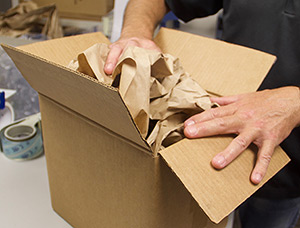
Void fill is a term that can refer to any cushioning, paper, or protection added to a package. Specifically, it fills an empty space inside a package and, in doing so, restricts movement of the product(s) which prevents damage.
BLOCKING & BRACING
The purpose of protective packaging that blocks and braces is to prevent products from shifting, sliding, or moving and protect the product(s) and the vulnerable corners and edges of the secondary package (carton) from damage. In order to block and brace effectively, all empty space should be filled as well.
CUSHIONING
This is normally something that is wrapped around more fragile objects to prevent damage during transit. Cushioning can prevent scratches or scuffs on products.
SURFACE PROTECTION
Often the protective packaging solutions that provide cushioning, also provide surface protection. This protective packaging keeps the products from getting scratched, scuffed, or the exterior surface of the product from being damaged.
Types of Protective Packaging
 |
| Paper void fill & cushioning |
Paper is normally used as to cushion products, but is versatile. Paper can also be used to block and brace and as a void fill solution. Paper is normally crumpled, either by hand or machine, which provides void fill and cushioning solutions. Some machines apply stitching to the paper to provide stronger block and brace protection as well as cushioning.
BUBBLE SOLUTIONS
There are a variety of bubble solutions. There are, of course, the standard and anti-static bubble that come in rolls and pouches. Bubble also comes in cohesive and adhesive forms as well. The cohesive bubble bonds to itself and not the product, while the adhesive bubble bonds directly to the product. Bubble solutions are used for cushioning and surface protection.
 |
| Bubble-on-demand systems |
Inflatable air solutions, including air pillows and bubble films, are one of the most common protective packaging solutions today. They are stored un-inflated and flat, but can quickly be inflated with the use of a machine. Air pillows can provide void fill, blocking and bracing, or cushioning to products. They can also help keep the weight of a package down, which is important for shipping. Bubble film is meant more for cushioning products. Like other bubble products, it is often wrapped around individual products or it can be placed on the bottom, top, and sides of a carton to protect multiple/larger items.
SURFACE PROTECTION
Often the protective packaging solutions that provide cushioning, also provide surface protection. This protective packaging keeps the product from getting scratched, scuffed, or the exterior surface of the product from being damaged.
 |
| HexcelWrap fragile wrap |
Fragile wrap is a paper-based cushioning material. This material is wrapped around products to reduce damage. It can assist businesses in using less packaging material for fragile products and is curbside recyclable. Fragile wrap is used on products like glassware, ceramics, cosmetics, electronics, and more.
FOAM
Foam protective packaging solutions are normally used on more expensive products to provide surface protection. You will see foam on products such as furniture, appliances, and more. Foam can come in sheets or pouches and in a variety of colors. It can also be cohesive or adhesive. Cohesive foam forms a bond to itself and not the product, while adhesive foam sticks to the product. Foam products can also be laminated with a film to provide added strength. This is known as lamifoam.
 |
| Polyair Mailers |
Mailers can be made of paper or plastic. They are durable, lightweight, customizable, and are available in a wide range of sizes. Mailers normally contain bubble to protect products from damage during shipping. These are best for smaller products and can help decrease shipping costs compared to cartons.
ANTI-CORROSION
There is a wide variety of protective packaging that offers
anti-corrosion VCI (Vapor Corrosion Inhibitor) protection. Some of these forms include poly and foam bags and films, paper, powders, and emitters. These solutions offer protection against corrosion and eliminate the use of oils rust removal, industrial degreasers, sandblasting, and more. It is important to one’s health and the environment that you choose a VCI that doesn’t include sodium nitrite. These solutions can be used in a large range of industries – automotive, heavy equipment, aerospace, electronics, precision metal, and more.